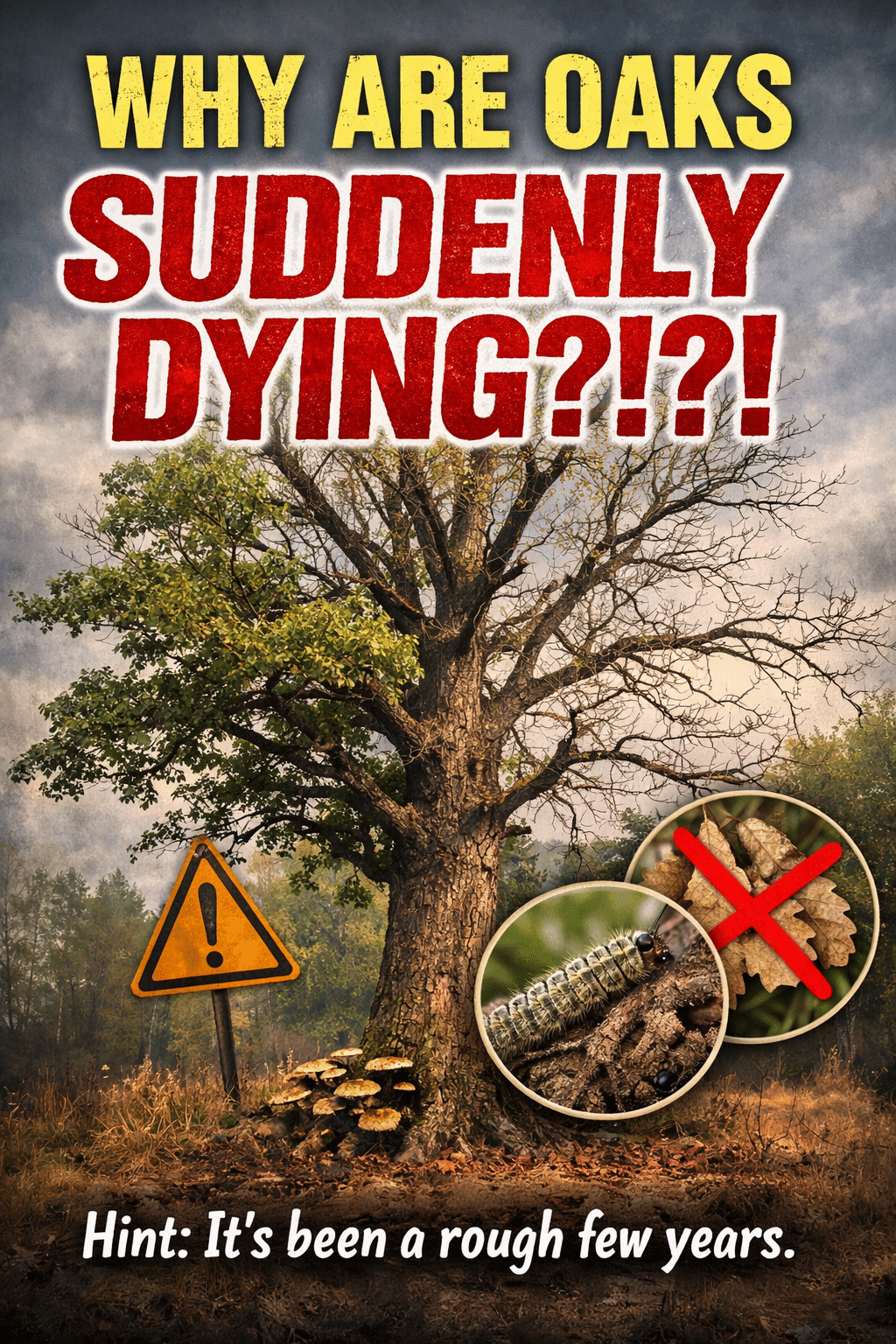
If you’ve found yourself staring up at your oak tree lately thinking, “Why does my tree look like it has given up on life and started its slow collapse into existential despair?”—congratulations, you’re not alone. From Wellsboro to Corning, it feels like oaks are collectively deciding to retire early. Dying tops, falling limbs, mushrooms sprouting at the base like nature’s “Check Engine” light—it’s everywhere.
And if you live in the Woodland Park area of Painted Post? It looks like the aftermath of a medieval battle scene. Oak carnage everywhere.
So what in the world is happening? Why are oaks dropping like they just got bad news at the doctor’s office? And more importantly, is your house the next target?
Let’s break down the main culprits in this Woodland Oak Apocalypse.
The Spongy Moth Invasion
Remember when those little caterpillar gremlins were crawling over everything? Your house. Your car. Your dog. Your unsuspecting garden gnome. They turned entire neighborhoods into Jackson Pollock paintings… with frass (that’s the fancy word for caterpillar poop).
For two to three summers straight, many oaks were fully defoliated. And sure, they grew their leaves back… but not for free. Every time a tree is stripped, it burns through stored energy reserves to rebuild its canopy.
Think of it like when you’re running on no sleep, eating gas station pizza every day, and surviving on caffeine and cigarettes. You can function, but you’re far more likely to get sick. Trees are no different.
Late-Season Frosts
Just when the trees thought they could finally take a breather, last year’s late frost rolled in like a wrecking ball. Those baby buds are soft, fragile, and expensive for the tree to produce. When they freeze, the tree must dip back into its energy reserves to push out an entirely new set.
It’s another layer of stress on an already exhausted system. You could call it death by a thousand papercuts… or in this case, late frosts.
Oak Wilt: A New Villain Entering the Chat
Oak wilt has officially crept into Tioga County, PA and will almost certainly be knocking on Corning’s door soon. This disease is caused by a fungus with the very fun-to-pronounce name Bretziella fagacearum, which honestly sounds like a medieval wizard who got kicked out of Hogwarts for clogging phloem tubes.
The pathogen moves through the tree, blocking its water highway until the tree basically dies of internal dehydration. Red oaks can die in as little as a month after infection. I’ve already sent confirmed samples to the lab from Morris, PA. This disease is no joke.
The Opportunistic Assassin: Two-Lined Chestnut Borer
As if your oak needed one more thing to worry about, here comes this guy: the Two-Lined Chestnut Borer.
A native insect that once helped wipe out our American chestnuts, The two-lined chestnut borer is now happily chewing through stressed oak trees. They tear through the tree’s vascular plumbing like a bad DIY project gone horribly wrong.
Healthy trees can often fend them off. Stressed, energy-depleted oaks? They’re basically hanging up a sign that says, “Free food.”
And thanks to everything mentioned above, many of our oaks are stressed. Your oak didn’t just give up. It’s been under siege for years.
So what can you do to save your oak? Should you start pricing chainsaws and emotionally preparing yourself for a stump?
Not so fast. In many cases, these trees aren’t dead—they’re exhausted. And there’s a big difference between giving up and needing help. In cases of rapid or severe decline, professional evaluation by a certified arborist can help clarify what’s happening before small problems become big ones.
Next week, we’ll talk about what you can actually do to help your oak recover—and how small, well-timed changes can dramatically improve its odds.
Mike White is an ISA Board Certified Master Arborist and the owner of TreemasterLLC. If you have any tree related questions, he’s happy to help! You can reach him at mike@treemasterllc.com