If your oak tree looks rough this spring, your first thought might be, “Well, this thing’s done for.” But in many cases, to borrow a line from a certain classic movie, it’s “not dead yet.”
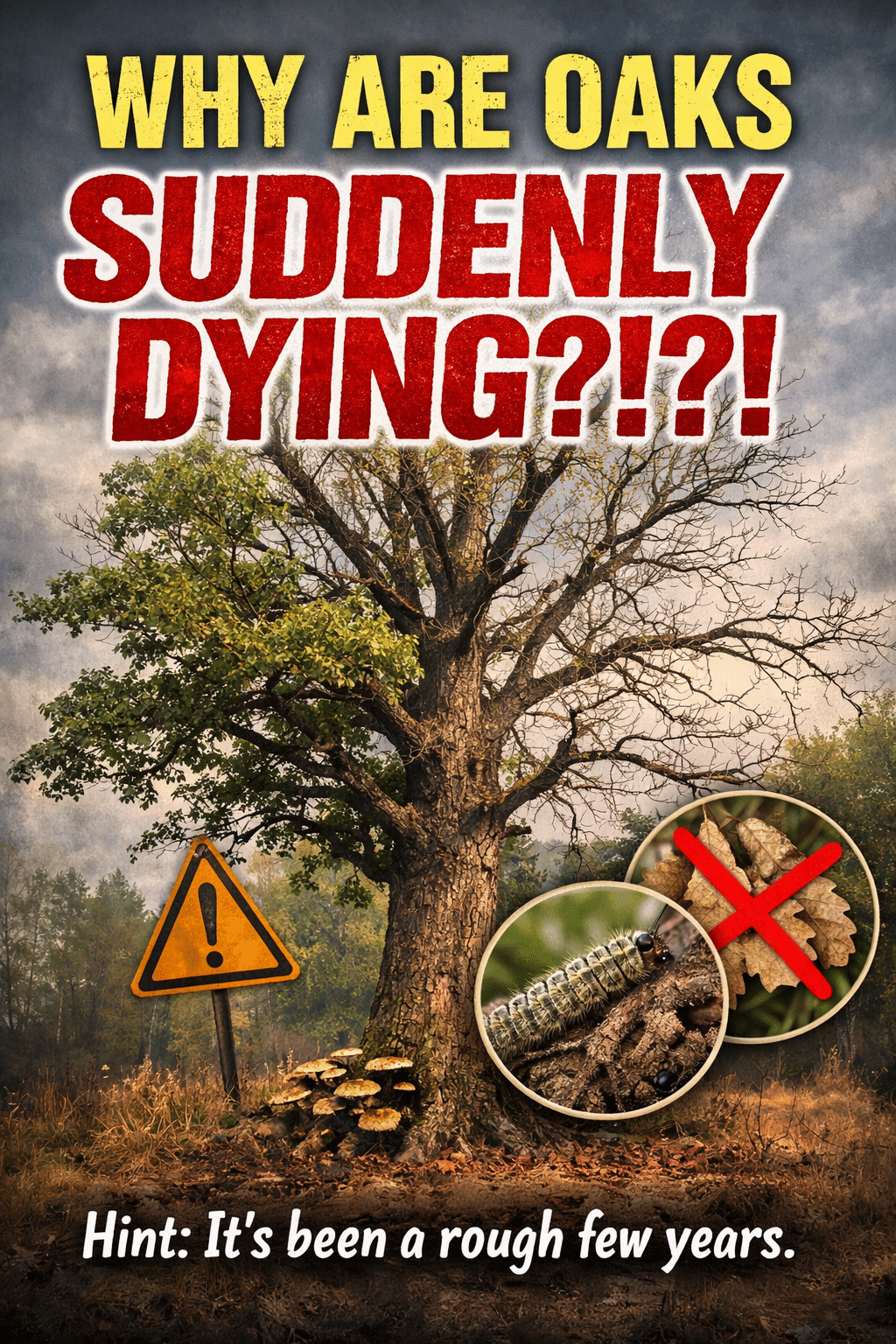
These trees have taken a serious beating. Insects, frost, drought, and disease have been tag-teaming them for years like a bad WWE match. A declining oak is often exhausted but not beyond help. And knowing the difference can save you from removing a tree that still has plenty of life left in it.
The goal isn’t magic cures. It’s stress reduction.
Mitigate Stress
This is the key. Insecticides and fungicides can help in the right situations, but they only treat symptoms, not the underlying cause. Stressed trees get eaten, infected, and overwhelmed. Healthy trees resist pests better.
If you want your oak to have a fighting chance, you need to build its resilience from the ground up. Here are some practical ways to help your tree fight back.
Water Your Tree (Seriously.)
Last summer we had a mini-drought. People’s lawns were crunchy. Trees were thirsty.
Your oak needs a long, deep soak during dry spells, not the “I waved a sprinkler at it for 10 minutes and called it good” kind of watering. Put your hose on a slow trickle and let it run for at least 30 minutes (conveniently, the length of an episode of The Office). Do this about once a week during dry periods.
Improve That Soil (Because Most Yards Are Terrible)
Residential soils are usually compacted, nutrient-deficient, and microbially dead, basically the tree equivalent of eating ramen noodles for every meal.
Mulch is one of the best gifts you can give your oak. Spread a wide ring around the tree, not a “mulch volcano,” which I’ve preached against here before, but a wide, 2–4-inch-deep blanket of fibrous, organic mulch. It breaks down and naturally feeds the tree. It also helps retain moisture, regulate soil temperature, and improve soil structure.
Your tree will thank you later.
Time Your Pruning (Winter Is Best)
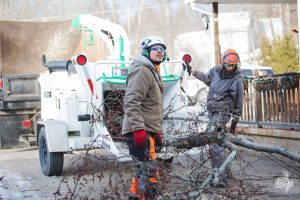
One more important way to help your oak is to time your pruning correctly. A declining oak often has dead or failing branches just waiting to take out your favorite lawn ornament—or worse. Pruning is necessary for safety, but when you prune matters just as much as how you prune.
Oak wilt spreads most aggressively during the warm months. Fresh pruning cuts release sap that attracts insects, which can carry the disease from one oak to another. That well-intentioned summer pruning session might feel productive, but it can send your tree into early retirement.
To reduce that risk, it’s best to prune oaks during their dormant season, roughly November through March—when insects are inactive and sap flow is low.
Timing your pruning properly can be the difference between helping save your oak—and accidentally being the final straw. However, if hazardous limbs pose an immediate danger, emergency pruning may be necessary. In those cases, limit the pruning to only what’s absolutely necessary.
Call an ISA Certified Arborist
Finally, if you’re feeling overwhelmed or just want to know exactly what’s going on with your oaks, call an ISA Certified Arborist (preferably one who writes articles like this). A proper assessment, stress-mitigation plan, and possible plant health care treatments can make the difference between a thriving oak and a very expensive removal bill.
Catching issues early will give your green giant the best chance possible.
The Bottom Line
Your oak isn’t giving up out of nowhere. It’s been hit with insects, droughts, frosts, and diseases—you name it. It’s basically the tree equivalent of a mom with five kids under five: exhausted, overwhelmed, and just trying to survive the day.
But with the right care, most oaks can recover, stabilize, and stick around for decades to come.
Mike white is an ISA Board Certified Master Arborist and the owner of TreemasterLLC. If you have any tree related questions, he’s happy to help! You can reach him at mike@treemasterllc.com