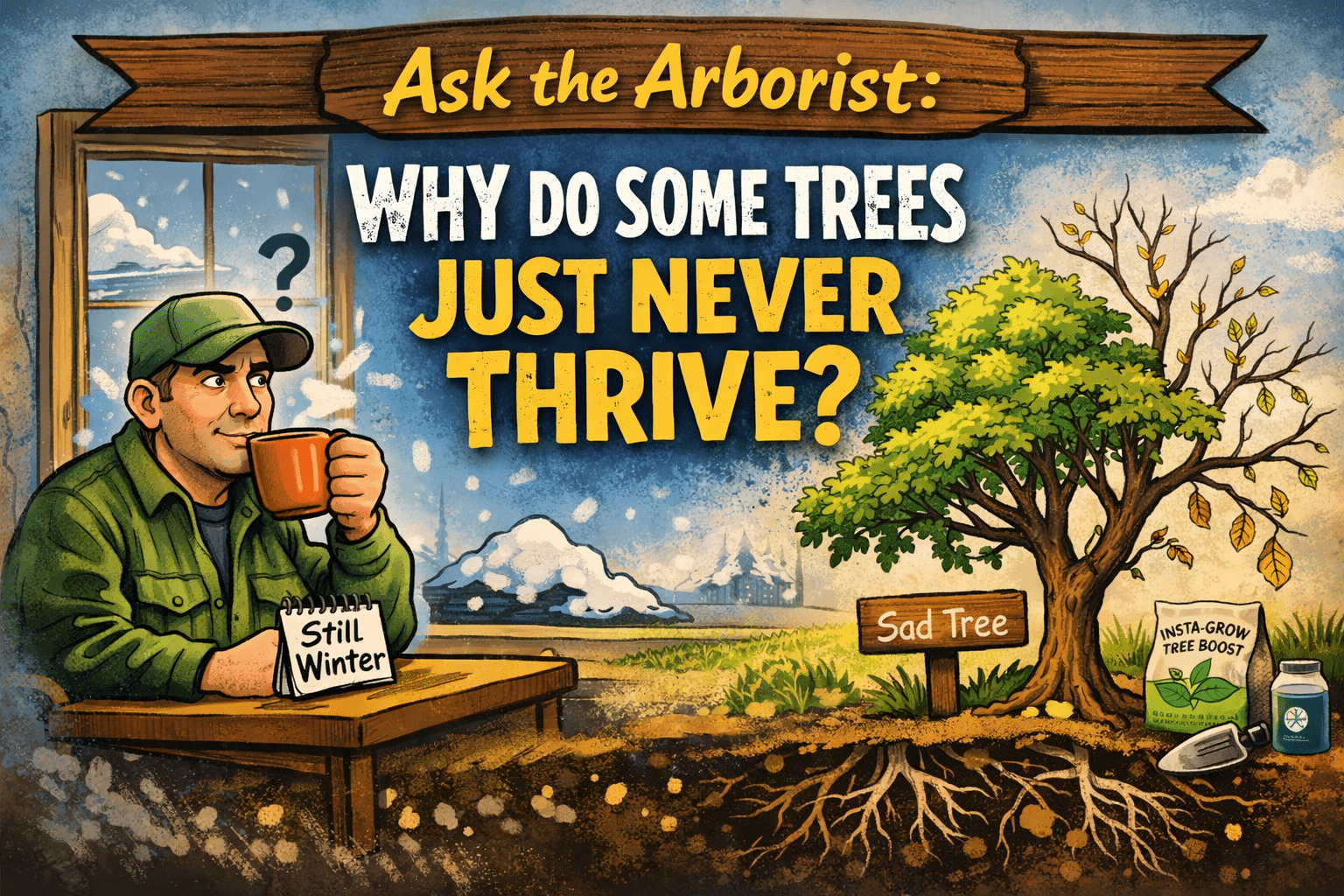
As I write, I’m sipping coffee by the window, squinting at the yard like it personally offended me. If you live in Wellsboro or Corning, you know the feeling — mud season, gray skies, snow piles that refuse to leave, and trees that look like they’re thinking about waking up… but not quite yet.
Soon enough, they will.
But every spring, I notice something interesting. Some trees leaf out beautifully — full canopy, deep green color, strong new growth like they’ve been quietly preparing all winter.
And others just sort of… participate.
Maybe you have one. It’s not dead. It’s not dramatically diseased. But it’s not thriving either. Small leaves. Thin canopy. Sparse growth. It hasn’t put on much size in years.
And you’ve probably wondered:
Why does that tree never look as good as it should?
Surviving Isn’t the Same as Thriving
Trees are remarkably resilient. They can survive in tough soil conditions for a long time. But survival and health are not the same thing.
In Pennsylvania forests, trees thrive. In residential yards, they often just cope. And most of the time, the issue isn’t insects or disease.
It’s the soil.
Forest Soil vs. Yard Soil in Our Area
Walk through a woodland in Tioga County and look down. You’ll see decomposing leaves, fallen branches returning nutrients to the ground, rich organic matter, and soft, spongey soil full of life. Nature constantly recycles what trees need.
Now consider what many landscape trees are growing in.
During construction, much of the topsoil was scraped away. Heavy equipment compacted what remained. Grass was planted right up to the trunk. Leaves are raked and removed every fall. Lawn equipment passes over the root zone week after week.
From a tree’s perspective, that’s a tough environment.
The Slow Effects of Nutrient Depletion
Tree roots require oxygen, water, and nutrients. When soil becomes compacted, air space is reduced. When organic matter is low, nutrients are no longer naturally replenished. Turfgrass competes for available resources.
The tree doesn’t suddenly collapse. It slowly runs on empty.
If you lived on Taco Bell, caffeine, and gas station pizza for several years, you’d probably still function. But eventually it would show. Lower energy. Weaker resilience. Not quite at your best.
Trees respond the same way to depleted soil.
Smaller leaves.
Reduced annual growth.
Less vibrant color.
Greater susceptibility to pests and stress.
Many of the struggling trees we evaluate across Wellsboro and Corning aren’t dying from disease — they’re simply undernourished.
What Healthy Soil Looks Like
Healthy soil is dark, crumbly, and alive. It absorbs water instead of shedding it. It supports worms and beneficial microbes that help make nutrients available to roots.
Compacted soil feels dense and hard. Water runs off quickly. Roots stay shallow because they cannot penetrate deeper layers. Over time, canopy health reflects what’s happening below the surface.
Half of a tree lives underground — and that half determines everything.
How to Improve Soil Health for Trees
If you want to improve tree health in your yard:
-
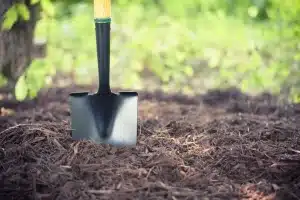
Add a 2–3 inch mulch ring (but don’t pile it against the trunk).
-
Avoid parking vehicles or storing heavy equipment near tree roots.
-
Allow some natural organic matter to build up in planting beds.
For trees that have struggled for years, professional soil treatments can help. Arborists use advanced techniques and fancy tools that reduce compaction and restore nutrients directly into the root zone without tearing up the yard. It’s quiet, underground work — but it can significantly improve long-term tree health.
Often the solution isn’t removal or drastic pruning. It’s restoring soil biology and nutrient availability.
So as your trees leaf out this spring, take a close look. Are they thriving — or just getting by?
If one seems perpetually underwhelming, the issue may not be in the branches. It may be beneath your feet.